Flat Tack Farm Tour
It was a drizzly Sunday on March 8 when a small group of PNWCSA farmers gathered at Flat Tack Farm in Vancouver, Washington, for a winter farm tour and potluck. Farmers from five other farms joined Kelly and Patrick to walk the land, swap ideas, and enjoy one of the longtime traditions of the CSA coalition: getting together in the slower season to learn from each other. The Flat Tack tour left everyone with both practical ideas and renewed energy.
Kelly and Patrick are, in many ways, renaissance farmers. They are deeply curious and seem to want to learn every part of the work, from growing and land stewardship to marketing, sales, infrastructure, and community building. That spirit shows up all over the farm. Flat Tack grows an impressively wide range of fruits and vegetables, including heirlooms and lesser-known crops like, cucamelon and feijoa, that bring surprise and delight to members’ boxes and farm stand tables. Their farm is rooted in the belief that local food should be flavorful, nutrient-dense, and interesting, not standardized or predictable.
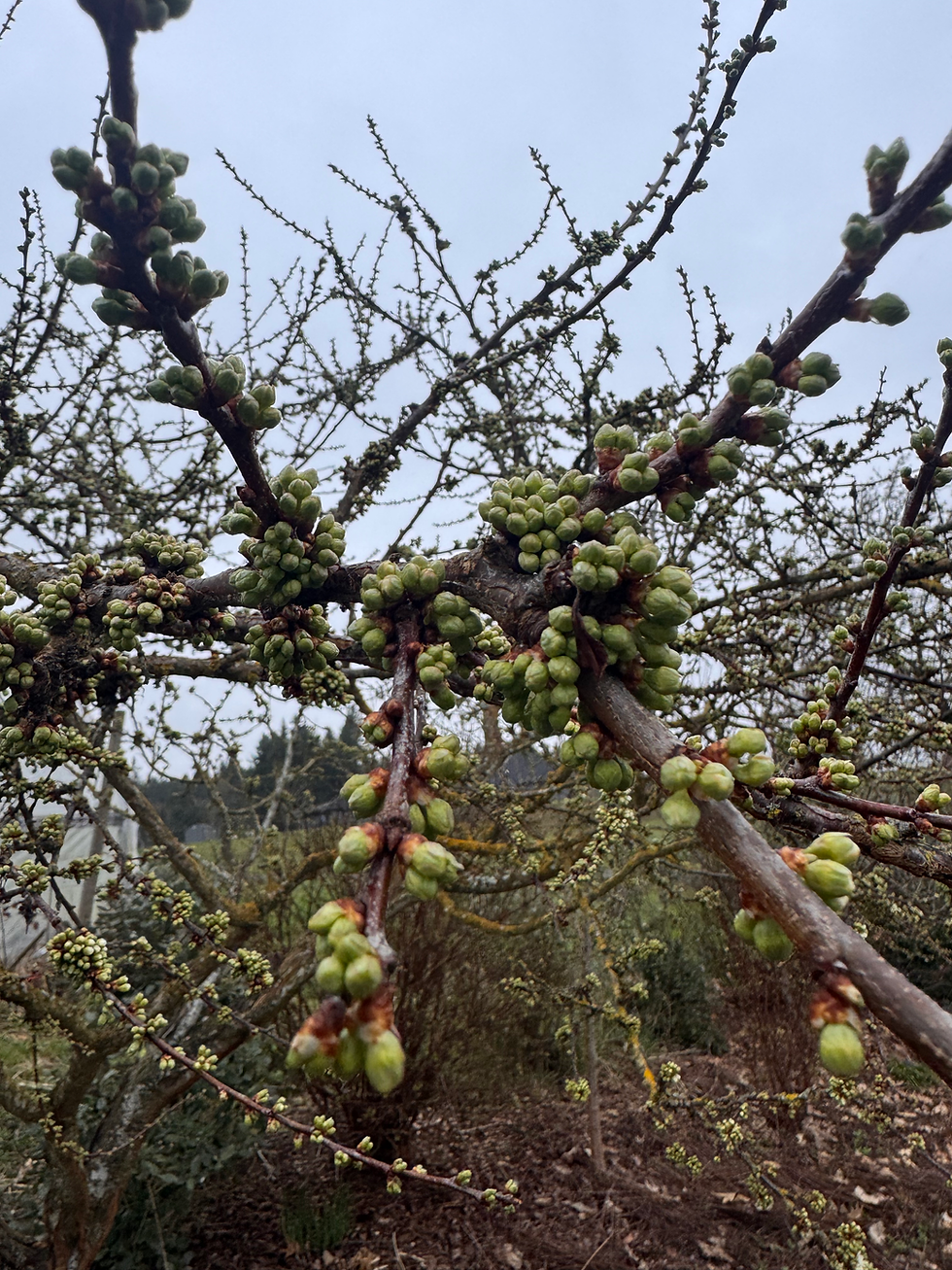
Their wide-ranging curiosity also shapes how they care for the land. On parts of the property that are less suited to tractor work, Kelly and Patrick are establishing food forests, expanding the farm in ways that match the landscape rather than forcing the landscape to match the farm. Their long-term vision includes not only annual vegetables and orchard crops, but a more layered and resilient perennial system as well. Their farming philosophy embraces regenerative methods, low-tillage, and soil-building.
Our conversation during the tour moved easily from field production to the business side of CSA. Kelly, who has experience in digital marketing, has been exploring different software tools for CSA management and farm-direct sales. We talked about several options, including GrownBy and its role in helping farms accept SNAP payments online through a federal grant-supported system. Farmers in the group were especially interested in GrownBy’s cooperative model and what it might mean for independent farms looking for affordable, values-aligned tools.
Just as important as the crops and systems at Flat Tack is the sense of community Kelly and Patrick are helping nurture in Clark County. They are involved in organizing monthly meetups for fresh fruit and vegetable farmers north of the Columbia, creating space for growers to connect, compare notes, and imagine what stronger collaboration in Clark County could look like. Out of those conversations, they hope one day to build something even bigger: perhaps a food hub, or even a multi-farm CSA that could strengthen both farmer resilience and community access to local food.
That same community-mindedness runs through the public face of the farm. Flat Tack is not only a place where food is grown, but also a place where people gather. Kelly and Patrick host a farm stand, workshops and on-farm dinners that invite people into a closer relationship with the farm and with each other. They frame local food as something that connects eaters to seasonality, stewardship, and community. On the ground, that philosophy feels very real.

The tour also gave us glimpses of the many skills beyond farming they have. Patrick built a chicken coop using Japanese wood joinery. Kelly is currently deep in an enthusiasm for black garlic and just got an oven that should help her produce more of it this year. Those kinds of details say something important about the farm: Flat Tack is shaped by play and experimentation!
By the end of the visit, with damp jackets and full plates, it felt like Flat Tack had offered more than a tour. Kelly and Patrick showed us what it looks like to build a farm as an ecosystem of food, learning, relationships, and possibility. They are growing a remarkable diversity of crops, stewarding land with care, testing tools for a stronger farm economy, and helping cultivate a wider network of growers in Clark County. We left grateful for their hospitality and inspired by the many ways they are imagining what a farm can be.


Comments